
'GENTLEMAN' MATTHEW BRADY
Women loved him, but men wanted him dead.

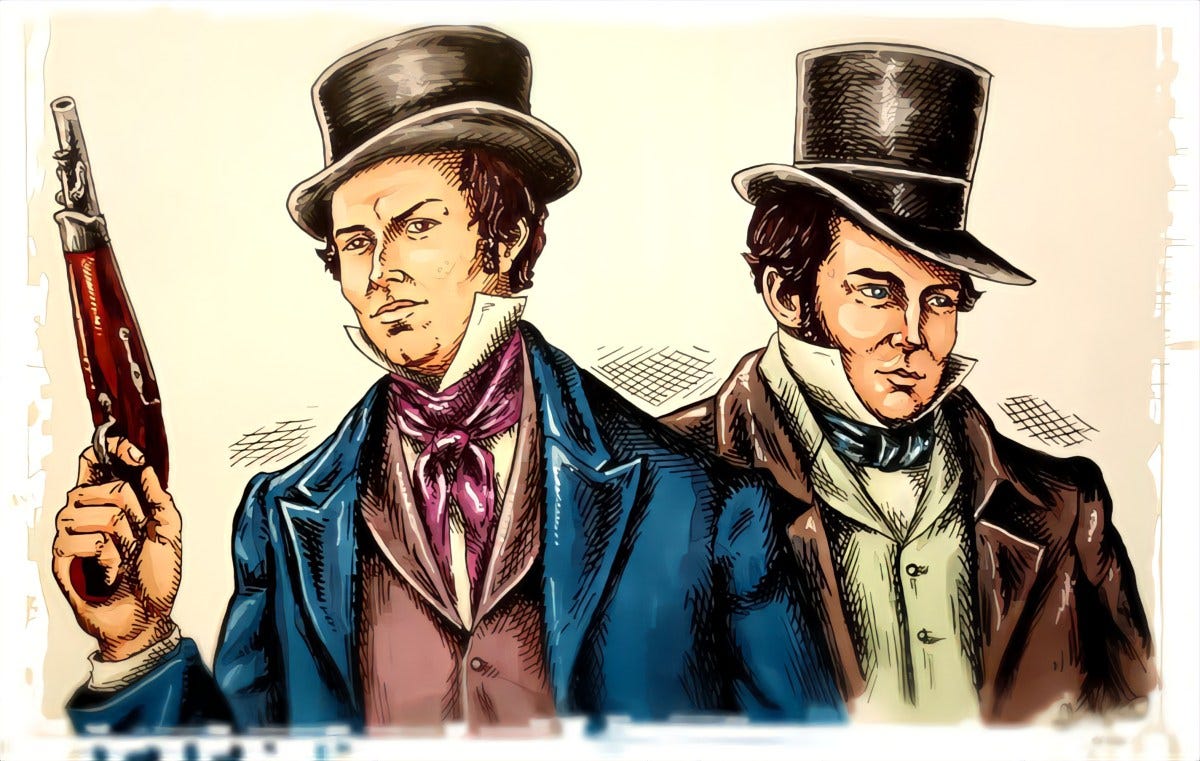
Representation of Matthew Brady. https://th.bing.com/th/id/OIP.DvpbsUYuUwzVCmquhi_4GgHaEs?w=288&h=183&c=7&r=0&o=7&dpr=1.3&pid=1.7&rm=3
Michael’s Curious world is exploring the history of how the grim convict penal colony of New South Wales matured into Australia, one of the best true democracies on Earth, based on the ideal of ‘a fair go for all’. To follow this fascinating saga, please:
Click ‘Subscribe’, choose a free or paid option and enter your details to receive full access to regular posts and the growing archive of past posts.
Click ‘Michael’s Curious World - Posts’ for a menu of the past posts.
‘Like’ to tell the Substack algorthim you enjoyed the post.
‘Restack’ to spread the word.
It only costs a coffee a month to join the journey to put fuel in my tank and feed Thor the wonder dog.
MATTHEW BRADY (1799 – May 4, 1826), was known as ‘Gentleman Brady’, but his proper name was Bready.
Born in Manchester, he was a groom to a gentleman, but was accused of stealing a basket, some butter, sugar and rice, convicted on April 17, 1820, and sentenced to seven years transportation under Britain’s harsh laws, arriving in Sydney on the Juliana on December 29, 1820.
He rebelled against the penal conditions, tried to escape several times, and received a total of 450 lashes between 1821 and 1826. In 1823 he was sent to the harsh new penal settlement at Sarah Island in Macquarie Harbour in Tasmania.
But Brady and 14 other convicts escaped from Sarah Island in a whaleboat on June 7, 1824, sailed around the south coast to the River Derwent and spent the next two years as bushrangers.
MACQUARIE HARBOUR - 'DEGRADATION, DEPRAVITY AND WOE'

Macquarie Harbour Penal Station, depicted by convict artist William Buelow Gould, 1833. By State Library of New South Wales, CC BY-SA 3.0 au, https://commons.wikimedia.org/w/index.php?curid=42802958
‘Gentleman Brady’
He was considered a bit of a gentleman who rarely robbed or insulted women, but the authorities regarded him as dangerous, particularly after he held up the town of Sorel, captured the local garrison and the Commander, Lieutenant William Gunn, was shot in the arm, which was amputated.
Lieutenant-Governor George Arthur on April 14, 1825, offered rewards totalling 100 guineas or 300 acres of land and a free pardon for convicts for the capture of Brady and his gang. Brady cheekily responded by offering a reward of 20 gallons of rum for any person who delivered Governor Arthur to him.
Brady also threatened to hang a man named John Priest for mistreating a woman named Mrs Blackwell at Newtown.
Brady’s gang was described in November, 1825, by a Mr R. Denne, who had spent six days in the custody of the gang. Denne said the gang had no fixed leader and quarrelled a lot, but Brady’s opinions were influential. He said Brady, known as ‘Matt’, was ‘stout, square-built’ and marked by smallpox.
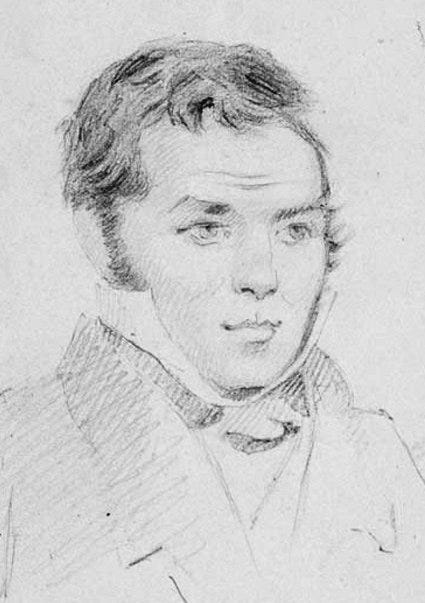
Portrait of Matthew Brady (crop), Tasmania, c 1826, by Thomas Bock, pencil sketch, State Library of New South Wales, SAFE/DL PX 5
Brady and his gang attacked the homestead of a Mr Dry on the dark night of March 4, 1826. A servant escaped and ran for help, bringing a group of troopers, resulting in a gunfight in which no-one was killed, and the bushrangers escaped in the dark.
Three days later, Brady shot dead farmer Thomas Kenton as payback for setting a trap for Brady.
Bad weather prevents escape attempt
Brady and his gang captured a boat, intending to sail to the mainland, but bad weather forced them to turn back.
One of Brady’s gang, an ex-convict named Cowan, betrayed him for the reward and Lieutenant Williams of the 57th Regiment, 14 soldiers and four armed prisoners confronted the Brady gang near Launceston.
Brady was wounded in the leg, his gang separated, and Brady and four others were spotted around a campfire on April 1.
Settler John Batman (later involved in founding Melbourne) and a group found Brady limping in pain near a creek and he surrendered and was taken to Launceston Gaol.
BATMAN: 'THE VILEST MAN I HAVE EVER KNOWN'

Painting of John Batman by William Beckwith McInnes. By William Beckwith McInnes - City of Melbourne Art and Heritage Collection, Public Domain, https://commons.wikimedia.org/w/index.php?curid=108908337.
Brady and Patrick Bryant pleaded guilty on April 27, 1826, to the murder of Thomas Kenton and to stealing four horses. Brady also pleaded guilty to setting fire to a dwelling, but not guilty to robbery.
Female appeals for mercy ignored
Brady was sentenced to death. Several petitions were received asking for his execution to be halted, and his cell was filled with wine, fruit, cakes and flowers from women at Hobart.
However, the petitions were ignored and Brady was hanged on May 4, 1826, at the old Hobart Gaol, as were Patrick Bryant, John Perry, John Thompson and Thomas Jeffrey. Brady complained about being hanged alongside Jeffrey, who he said was an informer, cannibal and mass murderer.
The Herald reported: ‘There was a hush, broken only by stifled sobs, as the bushranger knelt to receive the last consolations of his faith. Then, standing erect, he bade adieu to the multitude and died more like a martyr than a convicted felon.’
One of Brady’s hideouts, with views over the Tamar River, is now known as Brady’s Lookout and a popular picnic spot. His story has been featured in several plays, including ‘Matt Brady, Fabulous Bushranger: The Adventures of a Gay Man.’
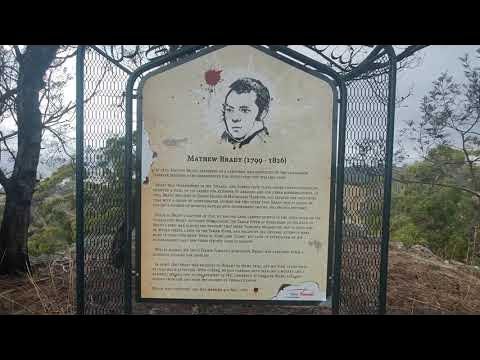
Display about Matthew Brady. https://i.ytimg.com/vi/EddcA-HtH9I/hqdefault.jpg?sqp=-oaymwEmCOADEOgC8quKqQMa8AEB-AH-CYAC0AWKAgwIABABGFYgXihlMA8=&rs=AOn4CLDs9yLdoeIkCcd0omMOqpKny9G7Gw
INVADING VAN DIEMAN'S LAND

Aboriginal Tasmanian woman Truganini. By Charles A. Woolley - National Library of Australia, Public Domain, https://commons.wikimedia.org/w/index.php?curid=117867179
When we visited the Female Factory in Hobart, we read it was common for female convicts sent out as household servants to come back pregnant.
Could have been a fake accusation.
John Macarthur was convinced his wife was unfaithful to him, but she wasn't. It was just Macarthur's paranoia.